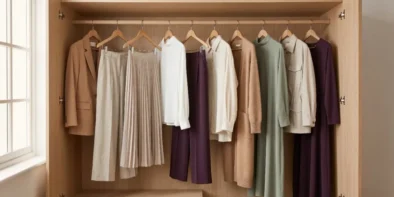
A job interview gives you one chance to set the tone before you’ve said a word. For modest dressers, that means finding pieces that read as polished and professional without compromise. The good news: a modest interview outfit is usually easier to get right than a typical office look, because the rules are clearer. Cover, structure, and keep colour and accessories minimal.
This guide covers what to wear, how to style your hijab, and the small details that interviewers actually notice.
The Three Rules That Matter Most
Before the outfit pieces, three principles decide whether a look reads as interview-ready.
Structure over softness. Tailored or semi-tailored pieces (blazers, straight trousers, pencil or A-line skirts) photograph and read as more deliberate than flowing or oversized fabrics. For more on fabrics that hold a tailored shape all day, see our best fabrics for modest professional wear guide. Save the relaxed pieces for after you’ve got the job.
One statement, not three. Pick one focal point, a blazer, a colour, or a textured fabric, and keep everything else plain. An outfit with a patterned hijab, a bold blazer, and statement jewellery competes with itself.
Colour does the talking before you do. Navy, charcoal, black, and soft neutrals read as serious in almost every industry. Save brighter colours for after the interview, once you know the office culture.
5 Modest Interview Outfit Options
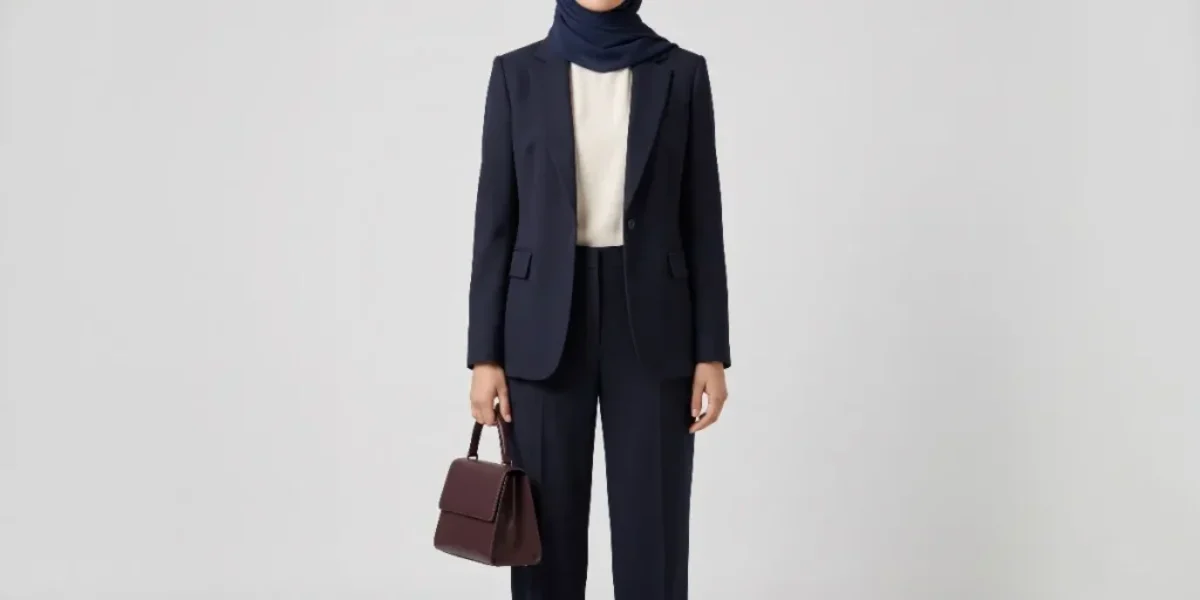
1. The Blazer and Trouser Set
A structured blazer over straight or wide-leg trousers is the safest, most universally professional option across industries.
How to style it: Choose a blazer one size fitted at the shoulder so it doesn’t add bulk. Wide-leg trousers in a matching or complementary neutral elongate the line. Keep the blazer buttoned during the interview itself.
2. The Midi Shirt Dress
A structured shirt dress in a mid-weight fabric gives a one-and-done outfit with no risk of mismatched separates.
How to style it: Look for a dress with a defined waist (belt or seam) so it doesn’t read as shapeless. Knee-to-midi length with opaque tights or trousers underneath covers the leg fully. Add a blazer over the top for formal industries like finance or law.
3. The Blouse and Pencil Skirt
A button-front blouse tucked into a pencil or A-line skirt is a classic that works for client-facing and corporate roles. If you prefer an abaya-based interview look, our abaya fabric and sizing guide covers how to get the fit and opacity right.
How to style it: Choose a blouse with sleeves to the wrist; roll-tab or three-quarter sleeves can look casual under camera or office lighting. A skirt that hits at or just below the knee, paired with trousers or opaque tights underneath, keeps the silhouette modest without looking stiff.
4. The Tunic and Trouser Combination
For roles in education, healthcare, or non-profits where a full blazer can feel overdressed, a longer tunic over slim or straight trousers strikes a more approachable note.
How to style it: Pick a tunic that falls mid-thigh to just above the knee. Avoid anything with a high slit. A thin belt at the natural waist adds shape without changing the coverage.
5. The Monochrome Maxi Dress
A single-colour, long-sleeve maxi dress in a structured fabric (not jersey or chiffon) works well for interviews that lean less corporate, such as creative or start-up roles.
How to style it: Choose a fabric with enough body to hold its shape rather than cling or float. A fitted or semi-fitted cut through the waist keeps it from reading as casual. Add a blazer if the role is more traditional than the dress code suggests.
Hijab Styling for Interviews
A simple wrap or pinned style in a solid colour or subtle texture is the most reliable choice for an interview. Chiffon and silk-feel fabrics sit neatly without bulk and photograph well on video calls. Match or complement your outfit’s main colour rather than introducing a second pattern. Pin securely; checking your hijab mid-interview breaks eye contact at the worst possible moment.
Shoes, Bag, and Accessories
Closed-toe flats, block heels, or low heels are all appropriate; avoid anything above a comfortable walking height, since you may be on your feet for part of the visit. A structured bag in a neutral colour reads as more prepared than a casual tote. Keep jewellery to one or two simple pieces, a watch, small earrings, or a thin ring, rather than a full set.
Frequently Asked Questions
Is black always the safest colour for an interview?
Black is reliable but not required. Navy, charcoal, and soft neutrals like camel or grey read equally well and can be easier to colour-match with a hijab. Save the all-black look for industries where it’s the norm, such as law or finance.
Can I wear a patterned hijab to an interview?
A subtle, small-scale pattern in tones that match your outfit is fine. Avoid large prints, bright clashing colours, or anything that competes with the outfit’s main colour.
What if the interview is over video, not in person?
The same rules apply, with extra attention to what’s visible on camera: hijab styling, neckline, and any wrinkling in the fabric near the collar. Test your camera framing beforehand to check the outfit doesn’t look washed out or overly bright under typical laptop lighting.
A modest interview outfit doesn’t need to be complicated. Pick one structured piece, one neutral colour story, and a hijab that matches without competing, and the rest of your preparation can take the focus where it belongs: the conversation itself.